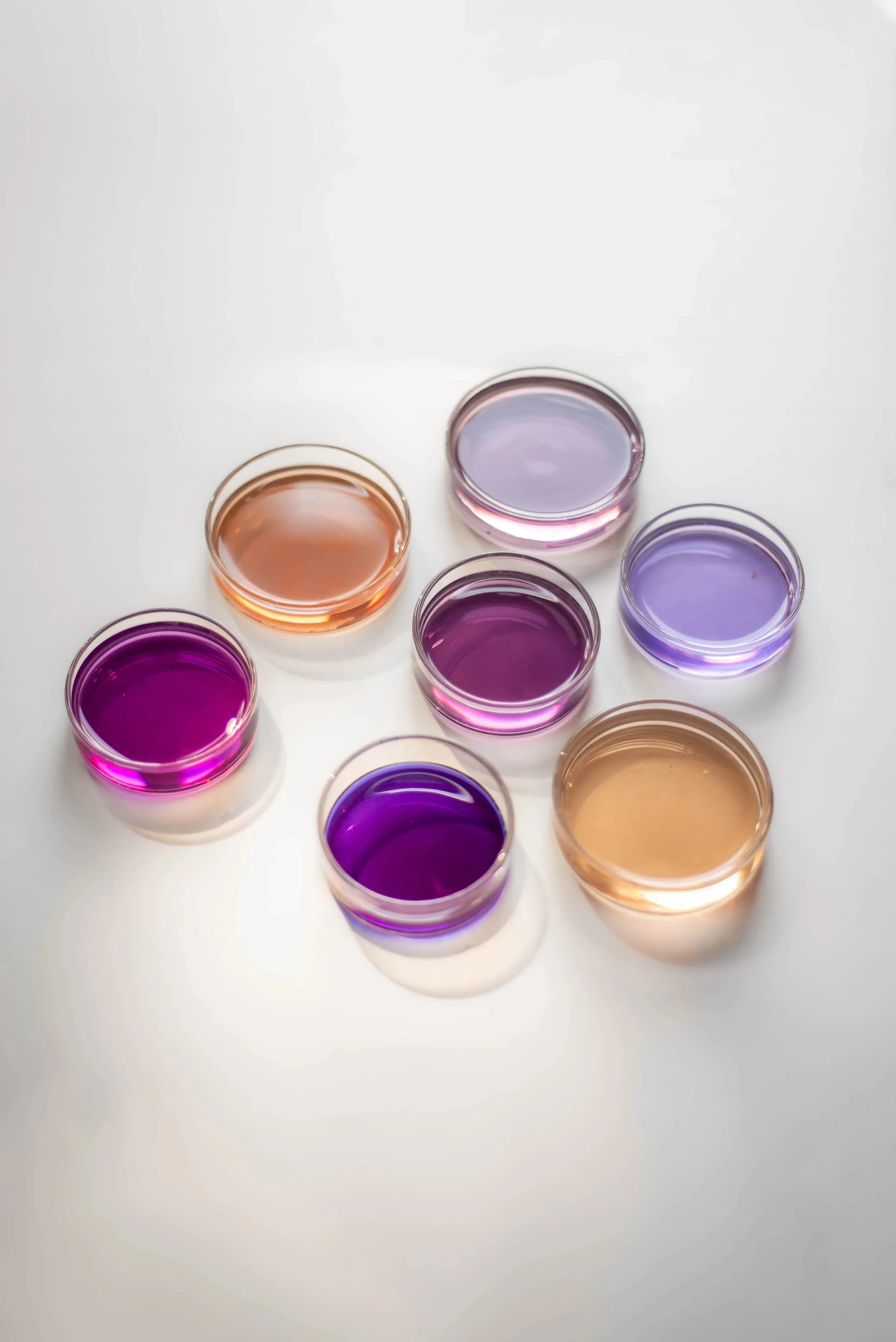
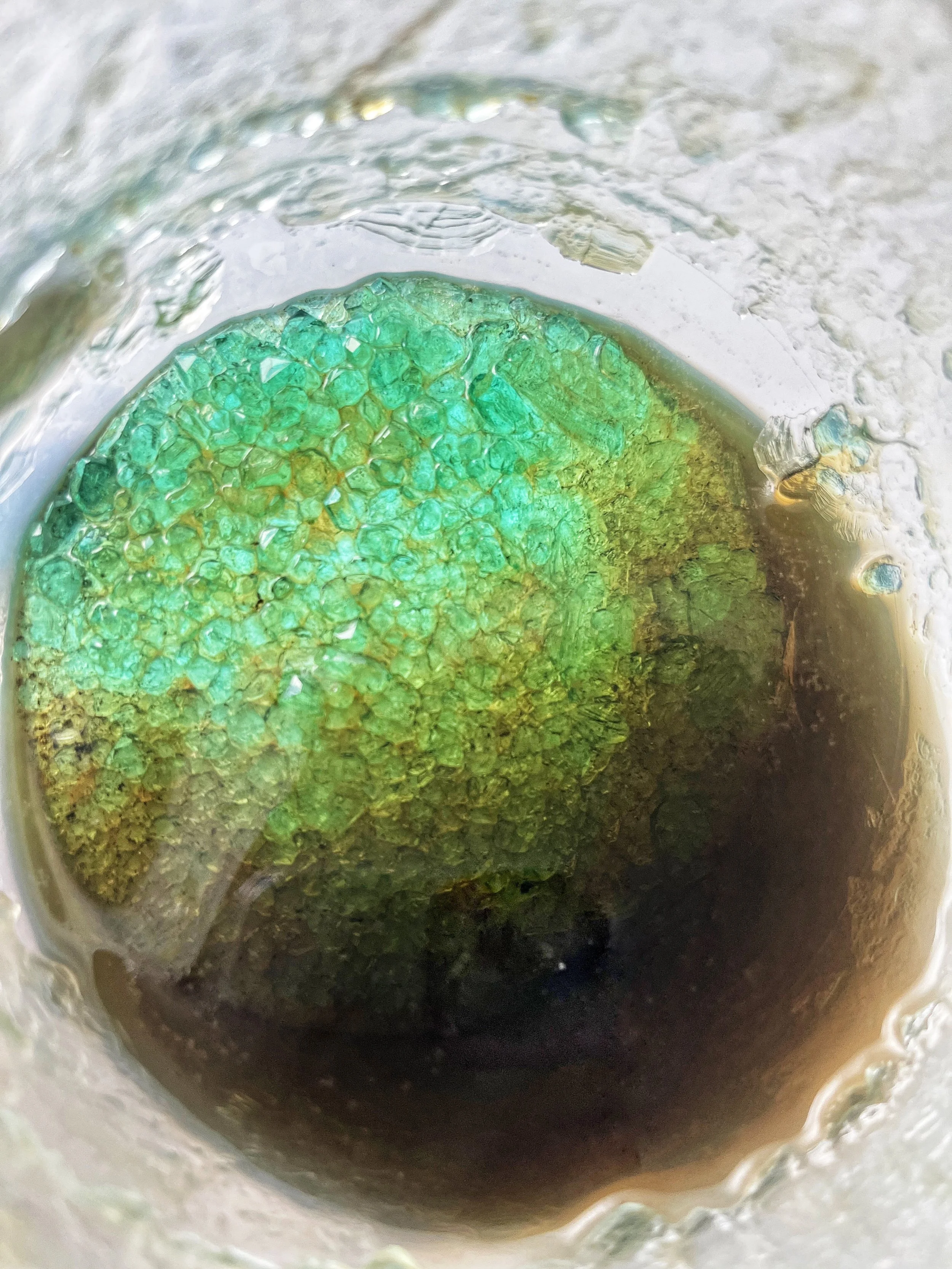
Imagine groundwater seeping through the iron-laden walls of an ancient mineshaft. It dribbles from the ceiling and pools on the floor, and gradually dries. The mineral salts it has garnered during its earthy percolation blossom in crystalline shards. In the 11th century, an anonymous alchemist described these crystals in De aluminibus et salibus (On Alums and Salts):
“Know that there are many kinds of vitriol and their places of occurrence are numerous. These vitriols are water and color that have coagulated by the dryness of earth and there is something hot and dry in their nature.”
Vitriols are named for the glassy appearance of their sparkling crystals, from the Latin vitrum, meaning ‘glass.’ They come in many colors due to their metallic constituents. White vitriol we have previously encountered; it is alum, a salt of aluminum. Blue vitriol is copper sulfate, red vitriol is cobalt sulfate, and zinc sulfate is another white vitriol. Green vitriol is the mordant ferrous sulfate, a salt of iron. Confusingly, it can also be called copperas thanks to its jade green hue, similar to tarnished copper.
Alchemists were engrossed with the vitriols and their products. If subjected to pyrolysis - destructive distillation over flame - green vitriol decomposes to produce rusty residue and oil of vitriol. This viscous, slow-to-evaporate liquid is a ravenous solvent, strong enough to dissolve some metals. We call it sulfuric acid today. Oil of vitriol gives us the descriptor for acerbic, caustically cruel invective: vitriolic.
Alchemists utilized vitriols to induce chemical destruction and transformation. They heated oil of vitriol with saltpeter to produce aqua fortis, an acid potent enough to dissolve silver. Combined with sal ammoniac it produced aqua regia, the ‘royal water’ capable of consuming gold. In the 14th century, this reaction came to be represented by the alchemical cipher of the Green Lion devouring the Sun. Drawn from first-hand laboratory processes initiated with green vitriol, the Green Lion allegorizes the destruction necessary for transmutation.
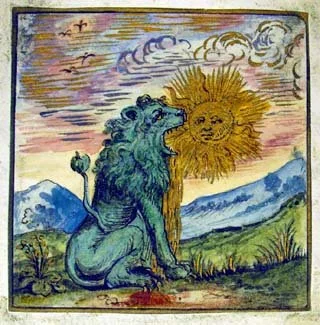
The Green Lion devours the Sun, from an 18th-century English copy of the Rosarium Philosophorum held by the University of Glasgow Library
The transformative and even destructive potency of green vitriol plays out in the dyeworks, too. Dyers know the chromatic power of iron salts, which immutably alter almost all natural dyes. The effect is called saddening: darkening and muting to a more profound visual register. This is the reaction that turns iron gall ink from silvery grey to permanent black. However, if applied with a heavy hand, green vitriol consumes the very cloth or parchment on which it sits. It gnaws fabric into a filigree of lace and corrupts handwriting to an obscure tangle. To avoid the transmutation of your fibers to dust, remember the appetite of the Green Lion when employing iron salts in the dye laboratory.
Quisque iaculis facilisis lacinia. Mauris euismod pellentesque tellus sit amet mollis.