Mordant is a wonderfully acerbic descriptor. A mordant wit is cutting; a mordant pain is gnawing. A mordant question is incisive. Also from the Latin mordēre, meaning to bite: morsels of food and remorseful moods. And mordant salts: the metal compounds which help natural dyes bite onto fibers.
The craft of natural dyeing is the pursuit of the greatest spectrum of hues with the highest durability to laundering, wear, and light exposure. Some natural dyes have a friendly chemical propensity for latching fast to fibers with no assistance at all. But the majority of dyes lack the attachment points for that connection. Because dyes are water soluble, colors merely sitting on the surface are liable to rinse off and flow down the drain when washed. They require the helping hand of a mordant, which chemically fixes dye molecules onto the fiber substrate.
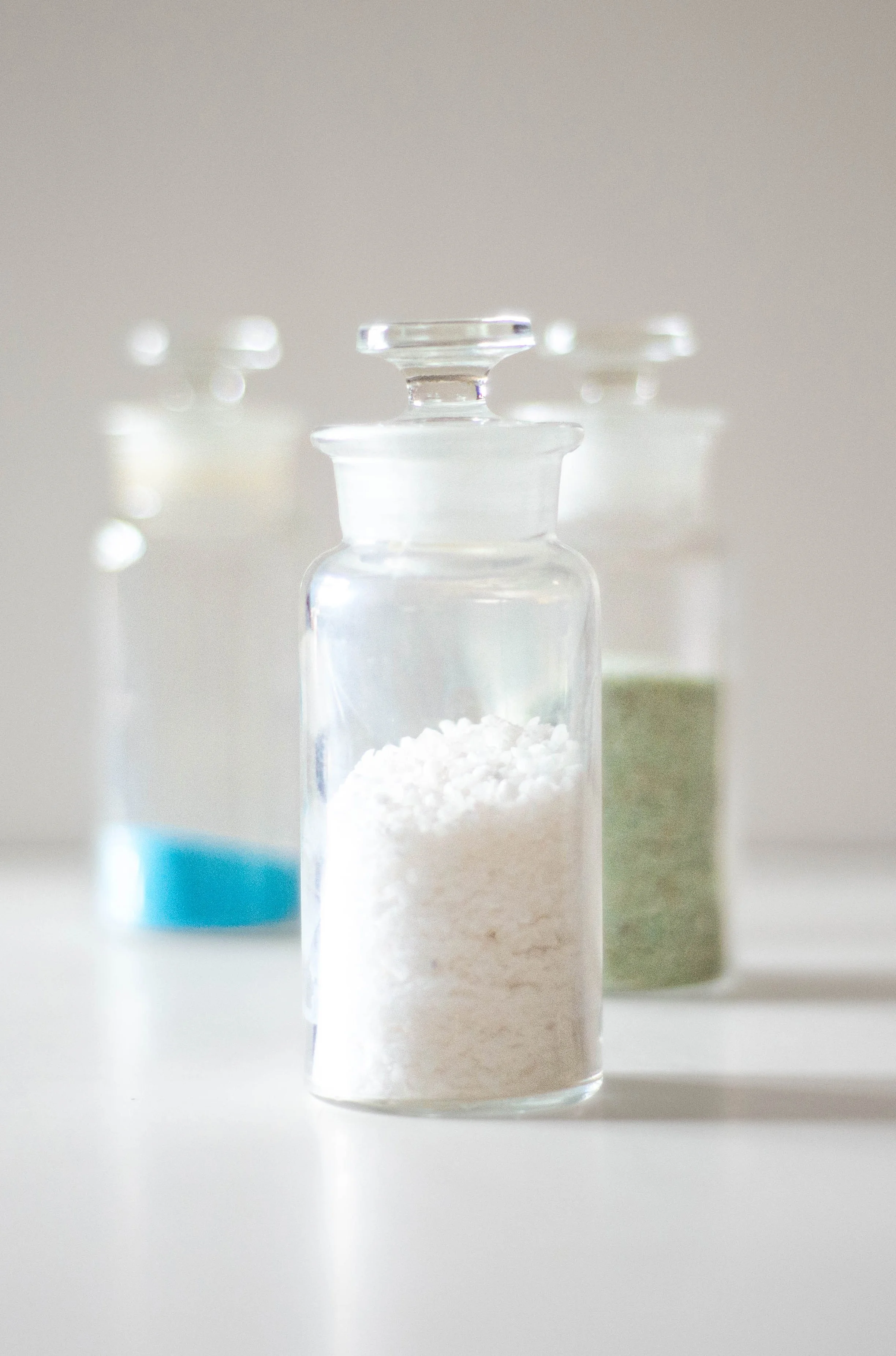
Mordants are metal salts, most commonly of aluminum, but also iron, copper, and tin. These metal salts dissolve in water, where they complexate with natural dyes - the metal ion attaches at multiple points to dye molecules. Dyes which bond to mordants in this way are called, conveniently enough, mordant dyes. The hue of mordant dyes may be altered by this attachment, depending on the choice of metal.
If only it were so simple to lodge the mordant and its colorful baggage in a fiber. This step usually requires careful attention to temperature, pH, and adjunct ingredients which assist with mordant uptake. These ingredients, including tannin, chalk, cream of tartar, and soda ash are not mordants in themselves, but create the chemical conditions for secure bonding to fibers.
Mordants effect strong color uptake and retention, vastly improving the washfastness and lightfastness of mordant dyes. They transform soluble dyes into insoluble complexes that won’t wash away during laundering, and bolster those colors against the depredations of sunlight.
While mordants help dyes bite into fibers, they can become corrosive if applied overgenerously, fretting and fraying the fiber substrate. This corrosive quality is a linkage to mordant’s etymological family tree, full of other biting words. To test if a fabric has been mordanted, simply touch it to your tongue and taste for the bitter, astringent saltiness. It tastes something like the flavor of a mordant wit or remorseful mood.
Quisque iaculis facilisis lacinia. Mauris euismod pellentesque tellus sit amet mollis.