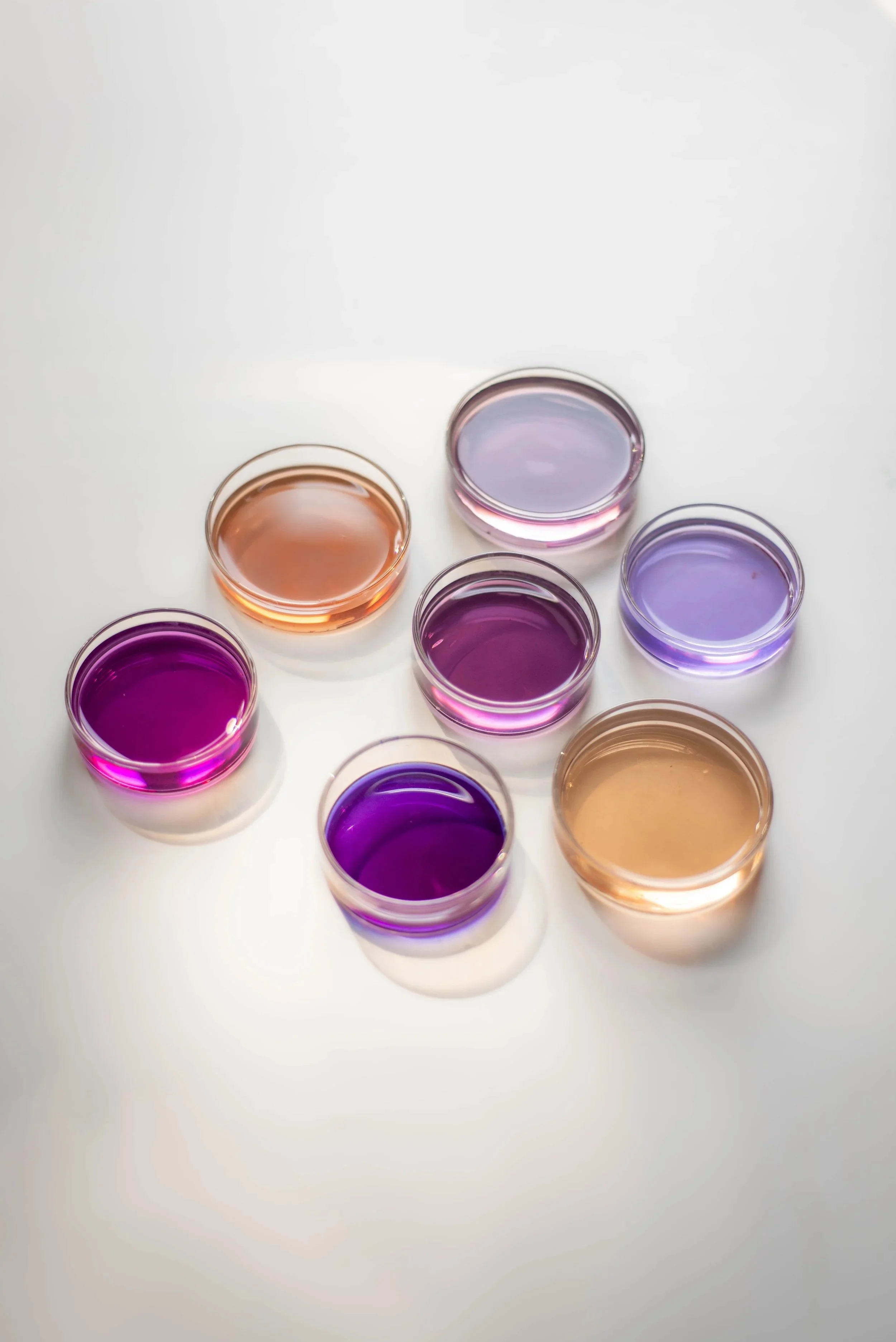
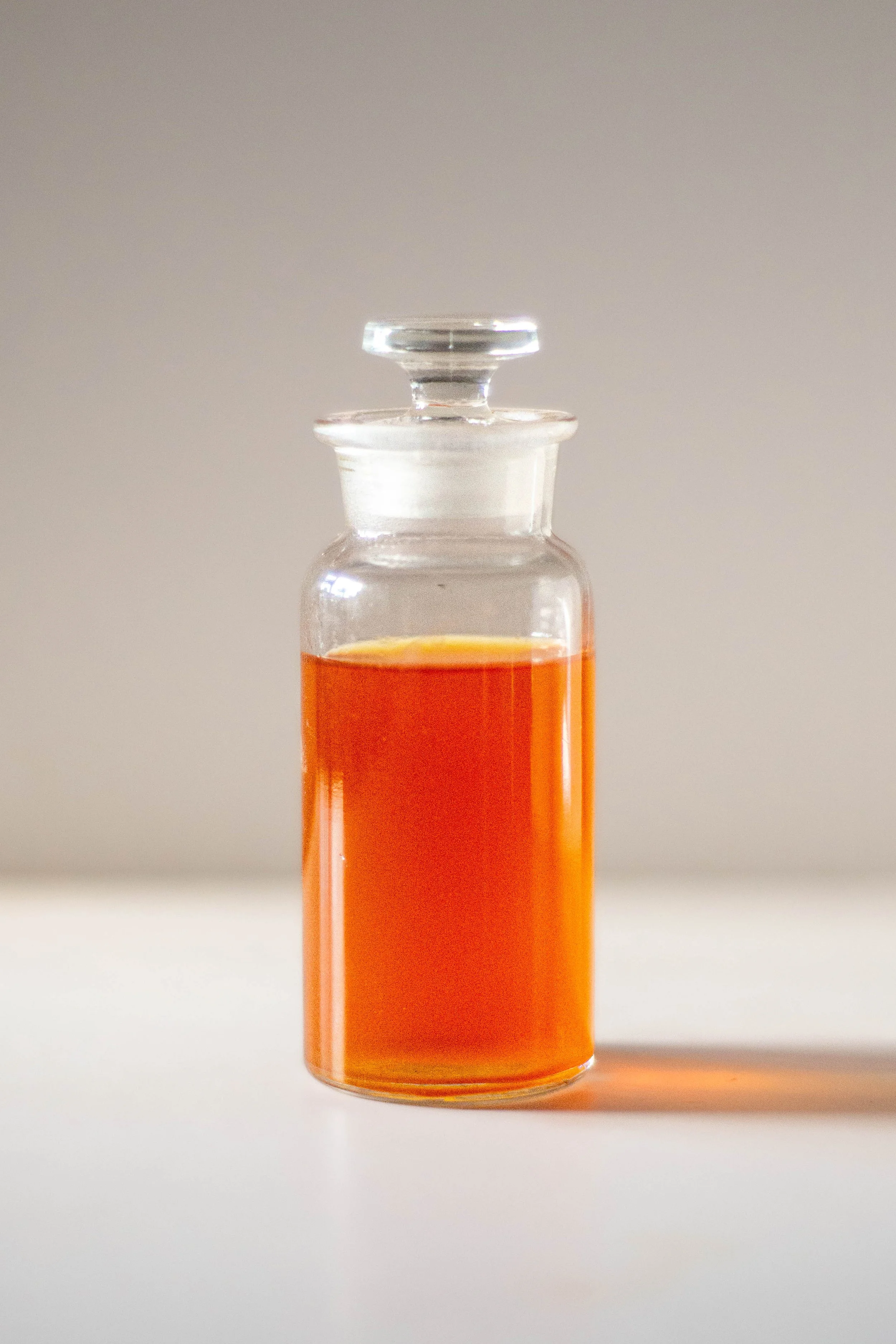
Dye is a soluble colorant compound. Soluble because it drifts into translucent solution in a solvent (usually water, but sometimes alcohol, fat, or another solvent). Dye is colorful because it reflects some portion of the visible spectrum of light to our eyes, which excitedly signal our brains to interpret the perception.
Because they are soluble, dyes seep into the pores or fibers of a substrate with penetrating color. To be made washfast (impervious to rinsing away with more solvent), dyes must be chemically affixed to the substrate. The bonding mechanism depends on the type of dye (mordant, vat, acid, fiber reactive, disperse) and the type of substrate (cellulose, protein, synthetic).
Natural dyes are derived from living sources: plants, fungi, insects, lichens, mollusks, algae, and bacteria. Natural dyes flow in solution through the bodies of plants and other living dye sources. Some dyes serve the purpose of conveying visible color, such as within the purple petals that beckon pollinators to a flower. Others dyes serve metabolic, immune, or reproductive purposes - or functions science hasn’t yet plumbed the depths of. Because natural dyes are organic molecules compounded within a body and lifespan, they are by nature excitingly reactive and changeable compounds.
Humans have sought dyes in the living world for many thousands of years; archaeological evidence suggests at least 34,000. Today, our relationship to natural dye sources is enduring evidence of countless generations of husbandry and craft. The history of dyeing encompasses deep connection to nature and astounding artisanry, as well as the abuse of living people and ecosystems with the burgeoning commodification of color. The history of dye is also the history of chemistry itself, stretching from empirical embodied knowledge, through the development of the experimental method, to molecular models and quantum physics.
