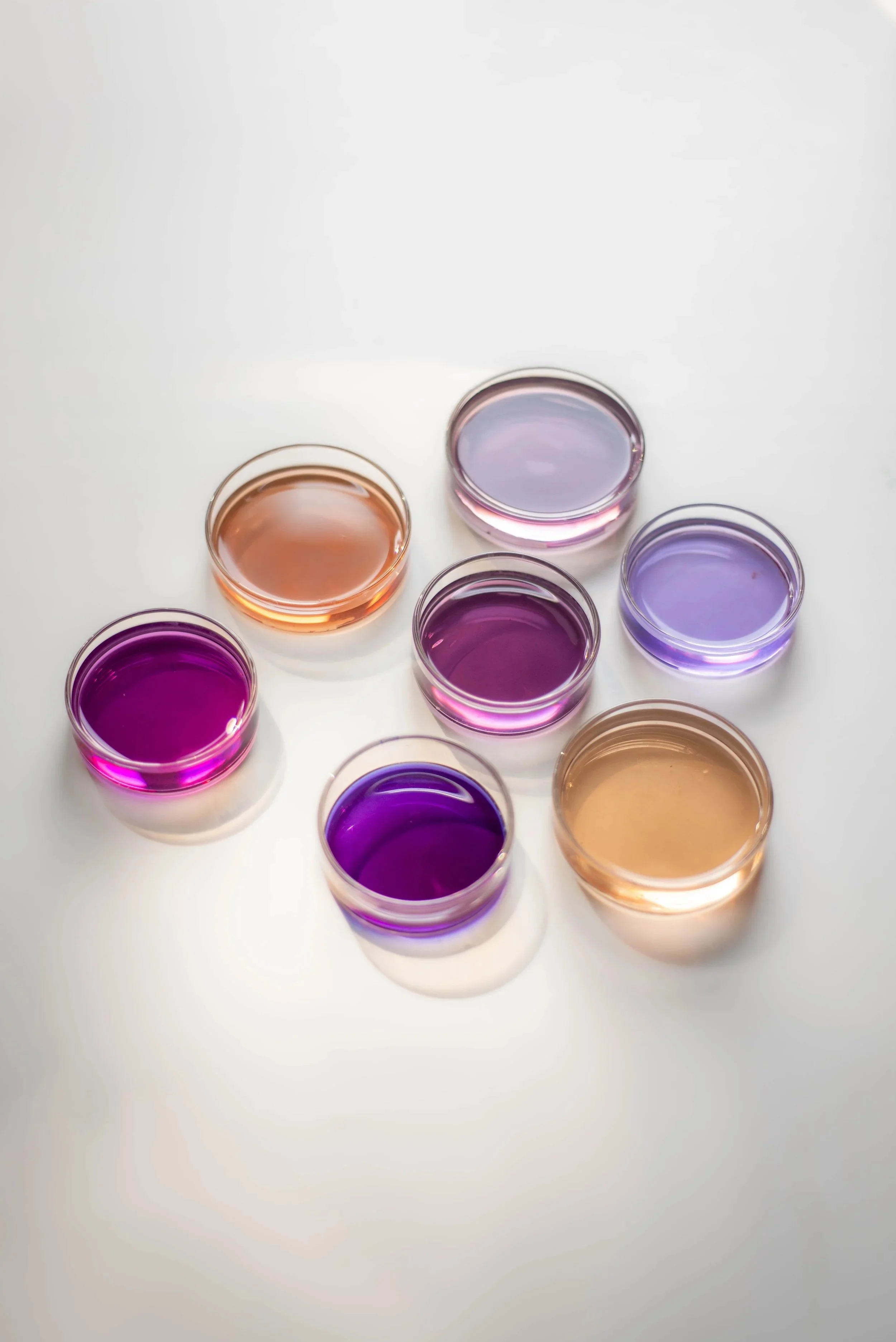
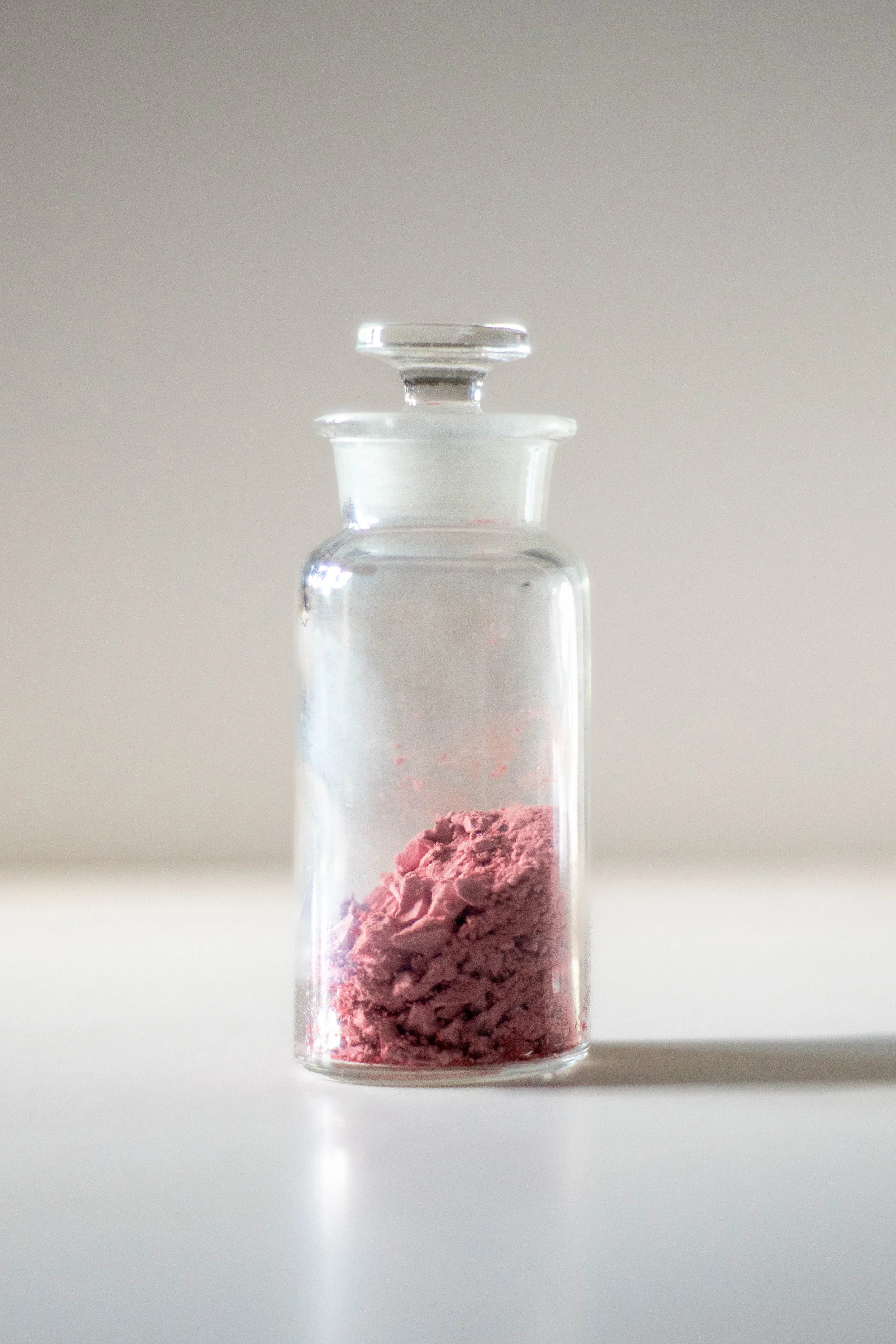
Pigment is colorful particulate. Pigments are colorful because they absorb and reflect portions of the visible spectrum of light. Their particles are insoluble, maintaining their integrity in water. This is because pigments are (by and large) inert, discreet, stable compounds. Unlike wanton changeable dyes, pigments withstand the depredations of acids, alkalis, and sunlight. For their beautiful colors and steadfast nature, pigments are prized by artists.
Because pigments are so stolid, they don’t bond to other molecules (say, canvas or paper). To become paint, pigment particles are enrobed in adhesive: a binder. It may be fat, sap, paste, glue, oil, wax, protein, plastic - any type of sticky adhesive to hold the pigment in place.
When pigment meets binder, it suddenly seems less inert. The effects of particle size, shape, and surface become apparent. Some pigments are necessarily large because, if ground too finely, their color would be scattered away in all directions. Morphology is the term for shape, which may be spherical, fibrous, platelet, needle-like, rod-shaped, crystalline, aggregate, or… amorphous. If a pigment particle has a reflective surface, it can appear lustrous, nacreous, or sparkly. When pigment meets binder, its absorbency, texture, granulation, and hiding strength become apparent. This last one, the opacity or transparency of a color, is governed by how pigment and binder each refract light.
Over hundreds of thousands of years, most of the pigments humans have used to express ourselves and beautify our world are inorganic: rocks and minerals. Much effort has gone into seeking, extracting, and refining these colors. Gradually, recipes for complex formulations were developed: white lead, vermillion, verdigris, and beyond. These are classified as premodern synthetics because they are concocted by humans, either to reproduce in more pure and abundant form a naturally-occurring color, or to contrive a compound never found in nature.
When the Synthetic Revolution kicked off in 1856, the palette of pigments and dyes available to artists ballooned. New synthetics are being invented to this day - very sophisticated and brilliant hues. Pigments of the preindustrial world may not necessarily be as pure, constant, or rule-abiding as their modern counterparts. They don’t always follow expectations or slot neatly into categories. Handmade and historical pigments are characterful, subtle, beguiling, eloquent expressions of nature and artisanry.
